
About UKSPA
UKSPA Companion Members
UKSPA’s Companion members are individuals who are recognised by the Association for their contribution to UKSPA and the wider network. The UKSPA Board honours the significant achievements from these individuals. The knowledge and experience that they hold is of substantial value both to the Association and its Members.

Professor John Allen
Professor Allen graduated in Chemistry from King’s College, London and was a university teacher of Biochemistry for some 20 years, with around 100 publications. He is a Fellow of the Royal Society of Chemistry
In 1985, he became the first Chief Executive of Newtech in North Wales, which supported the development of over 200 SMEs and assisted in creating some 1,700 jobs over 10 years. Between 1993 and 2000, he was Chief Executive of Manchester Science Park.
Professor Allen was twice Chairman of UKSPA. He was Chairman of Manchester Science Park between 2000 and 2006, and established Pythia Consulting to continue his consulting activities. He has undertaken consultancy on incubators, Science Parks, academic/industry links and knowledge-based SMEs in 36 countries around the world. In 2004 he received a national award from UKSPA as ‘the person who has made the most outstanding contribution to the UK Science Park movement over the past 20 years.

Tim Bacon
Tim Bacon has a professional and career background in Town Planning, Economic Development, Business Support and Property spanning 35 years. Having worked previously at three local authorities (including one in Scotland), he moved to Loughborough in 1989 to work for Charnwood Borough Council and then to Loughborough University in 2004. Tim has substantial experience of planning, funding and developing sites, putting in place their infrastructure and managing a range of premises to support business start-ups and larger companies. Tim has undertaken a range of consultancy and change-management projects and has extensive experience of staff and organisational development.
Tim has been an active member of UKSPA since 2004 having been Vice Chair and has supported a number of new UKSPA initiatives. Tim joined the second group of science park Managers to go through UKSPA’s Ithaka training programme and that Group continues to meet regularly, providing a valuable source of peer information, advice and support.

Jane Davies
Jane Davies was Chief Executive of Manchester Science Parks (msp) from 2000 – 2012. She was a member of the Board of UKSPA from 2004 to 2009 and Chairman from 2007. She has also served on the international board of the International Association of Science Parks, and has been President of IASP’s Advisory Council since 2009. In 2013 she joined the board of the Northern Ireland Science Park as a non-executive director.
Jane has a degree in chemistry from St Anne’s College, Oxford and joined BP Chemicals on graduation. Jane now works as an independent consultant, applying her expertise in the development and management of science parks and the contribution of innovation to economic activity. She is a member of the Institute of Knowledge Transfer and received her OBE in 2011 for services to innovation.
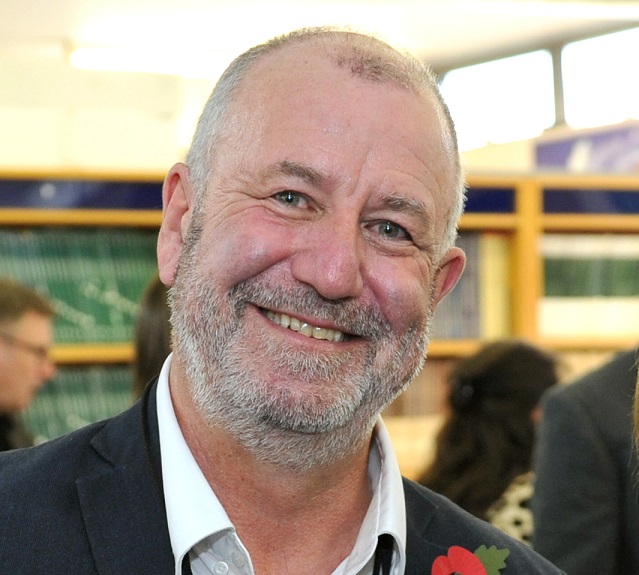
Jim Duvall
After 14 years at UKSPA, Jim Duvall retired as Executive Director in January 2022.
Before joining UKSPA, Jim was Head of Information at the Local Government Association where he was responsible for membership communications with a policy portfolio covering Freedom of Information and other information issues. He previously worked as Public Affairs Manager of the Association of County Councils spending time there as a Parliamentary Researcher in the House of Commons.

Nigel R Halford
Nigel Halford initially spent his working life in the food manufacturing sector and then spent the next 15 years within the fisheries sector in a role which involved research, consultancy and training, both in the UK and overseas.
In 1987, he joined the University of Hull as Head of Business and Regional Support – an extremely broad role which embraced technology transfer, innovation and enterprise. It was in the late 1980s that Nigel’s association with UKSPA commenced and following a period as a Director of the Association, he was Chairman in 2000-2002.
During his long association with UKSPA, he has undertaken a number of overseas assignments – predominantly in China, but also in Africa, Greece and the UAE.

Walter Herriot OBE
Walter Herriot OBE was the Managing Director of St John’s Innovation Centre Ltd from 1990 until his retirement at the end of November 2008. The Innovation Centre, based in Cambridge, is regarded as a model for incubators, particularly those linked to Universities, both nationally and internationally. In 1999 Walter was awarded an OBE for services to businesses in the East of England and in 2002 was the Cambridge Evening News ‘Businessman of the Year’.
In 2006 he received the Queens Award for Enterprise Promotion and was appointed Visiting Professor at the University of Hertfordshire. In 2008 Walter received an honorary doctorate from Anglia Ruskin University.
Following his retirement from St John’s Walter formed his own Consultancy, Herriot Associates and in the public sector has worked with EEDA, UEA ARU and the University of Cambridge. In the Private sector clients have included Carter Jonas and Oxford Innovation.

Catherine Johns
Catherine is Executive Director for Dance City and was CEO of Kielder Observatory for 4 years, successfully guiding the organisation through the pandemic and through a business planning process, creating a happy, vibrant, high-profile and high-performing organisation poised for sustainable growth. Prior to that Catherine was Director of the North East Centre of Excellence for Satellite Applications, building the fastest growing space cluster in the UK. Catherine was instrumental in turning the North East Technology Park from “two buildings in a field” to a £100M pioneering science park, was Vice-Chair of the United Kingdom Science Park Association, a Board Director of the International Association of Science Parks (IASP), founded Women in IASP, and sat on the Women’s Advisory Board for the North East Chamber of Commerce. Catherine is a highly experienced trustee and director, currently director of the Campaign for Science and Engineering, for iGiant, a Washington DC-based innovation accelerator, an evaluator for Strength in Places, Innovate UK’s £300M innovation fund, and will be joining the Council of the British School at Rome in 2024

Charles Monck
Charles Monck is a recognised international science park expert, having been closely involved in their evolution in the UK and in overseas countries for the last 30 years. He played an active role in the setting up and early development of UKSPA. He led the first evaluation of UK science parks with Prof David Storey, which formed the basis of the book ‘Science Parks and the Growth of High Technology Firms’. He is now engaged in a range of economic development consultancy projects in the UK and internationally including the development and evaluation of science parks, innovation centres and the commercialisation of research.

Steve Moss
Steven qualified as a Mechanical Engineer and then joined the United Kingdom Atomic Energy Authority (UKAEA) to work at the Atomic Energy Research Establishment at Harwell.
Steven has been involved in strategic property projects since 1990, holding the posts of Head of Strategic Projects Team of UKAEA Estates, Property Manager for Culham Science Centre, Development Manager for UKAEA’s Southern Property Group and Head of their Central Property Unit.
From 2007 to 2009, Steven was Head of the UKAEA’s Property Development Unit, preparing and implementing the property asset management strategy for latent major ‘science park’ assets. During this time, he was Programme Manager for the Harwell Science and Innovation Campus Joint Venture that unlocked the scientific potential of the world-renowned Harwell Campus.

David Rowe
David Rowe retired from the role of Director of the University of Warwick in March 2011, a position he held from its inception in 1982. Under him the Park developed to become one of the leading initiatives of its type in Europe through a partnership of the University of Warwick, two Local Authorities and an Investment Fund Manager. The Science Park innovated in the development of Satellite Incubators and a wide range of business start-up and development programmes.
David has published many papers and consulted internationally on many aspects of technology transfer and innovation management over the last two decades. David is also Director of his own consultancy business, Warwick Enterprise Limited, which has clients at UK University linked Science Parks and in Kuwait, Oman and the European Commission.

Nigel Shaw
Nigel Shaw was appointed as an UKSPA Companion in 2016. Nigel is an engineer with a career spanning roles including creating his own company, Green State Technology and ten years as CEO for Malvern Hills Science Park.
After recently completing an Aston MBA he’s gone on to work for the University of Warwick Science Park and subsequently Defra for whom he worked as Project Director on the National Agri-Food Innovation Campus, York.
Nigel has substantial experience of grant applications and pitching for funding.