2025-26 was a year of strong progress, with foundations built over the last decade translating into tangible value.
University of Birmingham Enterprise has published its Review of 2025-26, a dynamic and impactful year that saw growth and investment in spin-outs, and standout moments of progress resulting from our work in the Midlands region.
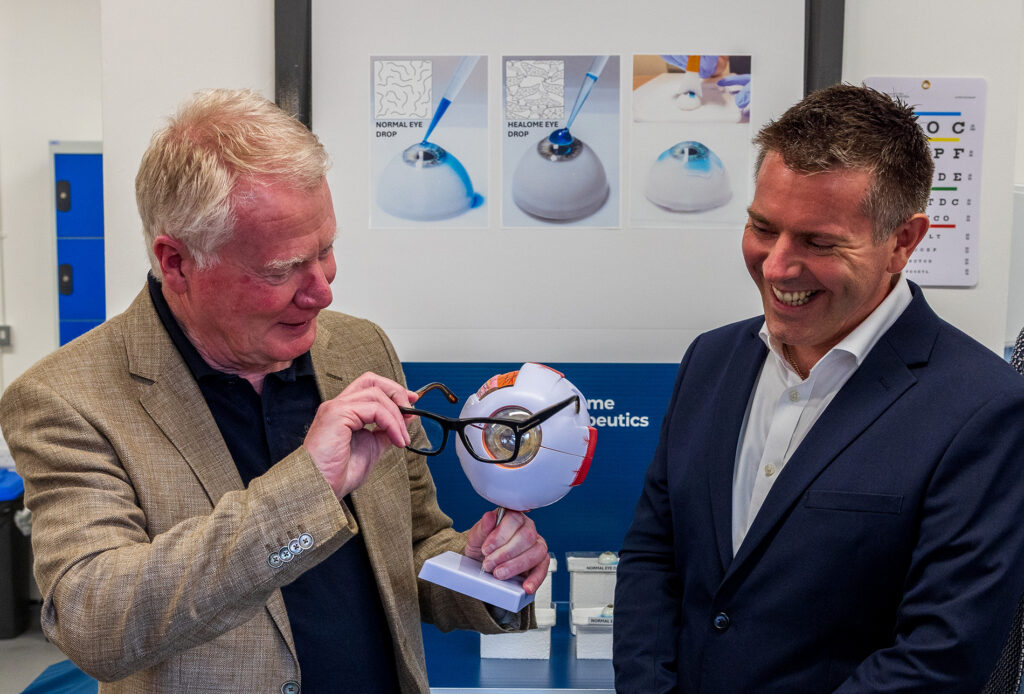
Quantum spin-out Delta.g raised £4.6 million in a Seed round, a record for a Birmingham spin-out. More recently, eye care treatment company Healome Therapeutics announced a £2 million over-subscribed Seed round, KVector, which is developing a next generation antenna technology, raised £3.8 million and medical diagnostics company IMS Solutions raised £1.1 million.
David Coleman, CEO of University of Birmingham Enterprise said: “In recent years we have focussed on improving the quality of each opportunity by ensuring our spin-out companies are based on distinctive, high potential technologies and experienced leadership, so they are more attractive to investors. As a result, we have seen large seed rounds in what is still a difficult fundraising environment.”
Three of these Seed rounds (Healome, KVector, and IMS Solutions) involved Midlands Mindforge, a patient capital investment company set up by research-intensive Midlands universities to invest in world-class science and technology businesses created in the region.
University of Birmingham Enterprise played a pivotal role in convening decision makers from the eight co-founding universities and worked with Midlands Innovation to drive progress behind the scenes before the investment company was established in 2023. In June this year, Mindforge announced it had entered the investment phase at the UK Global R&D and Science Investment Summit, which showcased the Midlands’ world‑leading research strengths and investment‑ready opportunities on a world stage.
Collaboration between Midlands universities has been further strengthened through the £16m Forging Ahead project. Launched in 2025, Forging Ahead aims to turn the Midlands’ research and innovation strengths into commercial success, strengthening networks, building capacity and supporting diverse talent to drive inclusive economic growth.
The projects initiated or supported by the Enterprise team create impact, and also deliver direct benefit to the Midlands, by supporting innovative young companies, improving the well-being of local residents, or fostering conditions where innovation can flourish.
David Coleman said: “Universities are increasingly expected to provide more than traditional degree outputs, and the formation and funding of spin-outs is amongst the clearest evidence of economic impact. The groundwork laid in previous years has started to crystallise, and is now bringing direct benefit to the University, the region, and the nation.”
The 2025-26 University of Birmingham Enterprise Annual Review is available online and can be accessed here.
Picture Credit: West Midlands Combined Authority.