
Reflections from the UK Global R&D and Science Investment Summit 2026
By Ruth Hall, Chief Executive, UK Science Park Association (UKSPA)
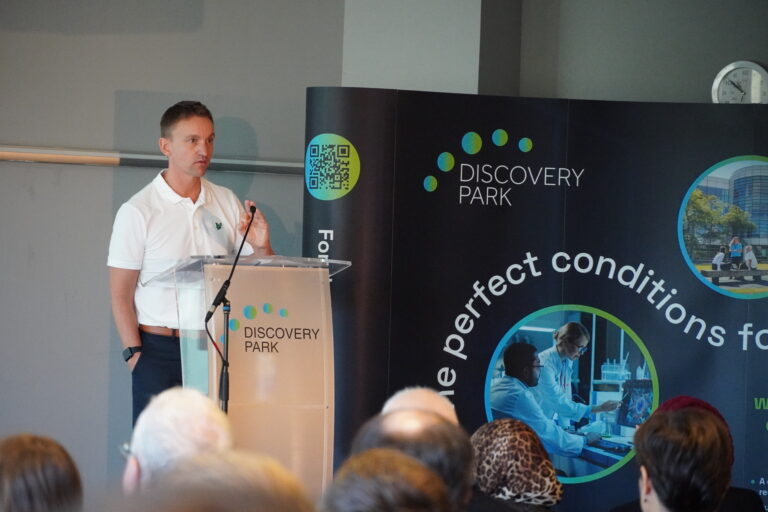
Last week, UKSPA was proud to host a panel discussion at the UK Global R&D and Science Investment Summit, bringing together leaders from investment, academia, government and innovation to explore the role science parks and areas of innovation play in delivering the UK’s industrial future.
The conversation took place against the backdrop of the Government’s emerging Industrial Strategy and a growing focus on how the UK can strengthen productivity, attract investment and convert world class research into long term economic growth.
One thing that struck me was how much the national conversation has evolved. For many years, science parks, knowledge quarters, innovation districts and research campuses have been viewed as important supporting infrastructure. Places where innovative businesses could access workspace, specialist facilities and connections to research expertise.
Increasingly, however, they are being recognised as something more significant.
“Science parks and innovation clusters are part of the UK’s core economic infrastructure.”
Reflecting on Chancellor Rachel Reeves’ Mais Lecture in March, through the lens of places of innovation, her statement showed more than just support for place-based science, technology and innovation. These environments are increasingly being viewed as an integral part of the UK’s industrial strategy.
What were often viewed as real estate-led developments, university adjuncts, or local regeneration tools, are now reframed with the expectation of delivering measurable productivity gains, business creation, inward investment and scaling, and with Government prioritising outcomes (growth, IP, exports) over occupancy.
This is something our members have known since the inception of the science park model 40 years ago; that they are not “nice-to-have systems”, they’re critical infrastructure for economic delivery, growth and security.
Government is increasingly recognising that innovation spaces are not peripheral to economic growth, but central to it. Combined with the move to devolve regional investment decisions, the message is clear – future growth will be driven by regional strengths, priority sectors, and targeted investment.
Successful innovation is rarely the result of a single organisation acting alone. It emerges when researchers, entrepreneurs, investors, businesses, universities and public sector partners come together within connected ecosystems that support the journey from discovery to commercialisation and contribute to wider civic ambition. The UK is fortunate to possess many of these ecosystems already.
Collectively, over 200 UKSPA members support more than 6,000 businesses and 140,000 high value jobs across the UK.
Across our membership, we see examples every day of science parks, innovation districts, research campuses and technology clusters helping businesses start, scale and grow. They provide the specialist environments, networks and support that allow innovative companies to develop products, attract investment and access new markets. These are all essential ingredients in improving productivity, strengthening competitiveness and supporting long-term economic growth.
The challenge facing the UK is creating the conditions that allow innovation to scale. This was a recurring theme throughout our panel discussion. The UK performs exceptionally well in research and discovery. We have world leading universities, internationally recognised research strengths and a strong entrepreneurial culture.
What remains more challenging is ensuring that innovative businesses can continue their growth journeys within the UK rather than seeking talent, investment or facilities elsewhere.
That requires funding, access to specialist R&D infrastructure, grow on space for ambitious businesses, strong connections between universities and industry, investment networks, skills pipelines and long-term planning. Most importantly, it requires connected innovation ecosystems.
One of the strongest messages from the Summit was the importance of clusters.
The Government’s Industrial Strategy places increasing emphasis on place-based growth, regional strengths and priority sectors. This reflects an important reality: innovation is not evenly distributed. It thrives where expertise, talent, infrastructure and investment come together around areas of competitive advantage.
Whether in life sciences, advanced manufacturing, clean energy, space technologies or deep tech, clusters help turn national ambitions into economic outcomes.
The UK already has several internationally recognised innovation clusters. The opportunity now is to strengthen connectivity between them and build on the collective strengths that exist across the country.
At UKSPA, we have an increasingly important role to play in that future. Science parks and innovation clusters are platforms for collaboration, commercialisation and growth. They help businesses access the people, facilities and partnerships they need to succeed, and they create environments where investment can be directed more effectively and innovation can move more quickly from idea to impact.
As discussions around industrial strategy, investment and economic growth continue, it is important that these environments are recognised as strategic assets that contribute directly to national prosperity.
The Summit reinforced the scale of the opportunity ahead. The UK has the research excellence, entrepreneurial talent and innovation capability needed to compete on the global stage. The task now is to ensure we continue investing in the places, partnerships and ecosystems that enable those strengths to flourish.
Huge thanks to our incredible panellists: Professor Chris Low (Panel Chair), Rt Hon Greg Clark – Executive Chair, University of Warwick Innovation District; Chair of WMG, Luke Pulford – Leads Minerva Business Angels, University of Warwick, Mark Tock – Chief Operating Officer, University of Warwick Science Park, Caroline Fleming – Director, Surrey Innovation District, University of Surrey.