O2 has launched the first commercial laboratory for 5G and satellite communications in the UK to explore next generation connectivity solutions for connected and autonomous vehicles (CAVs).
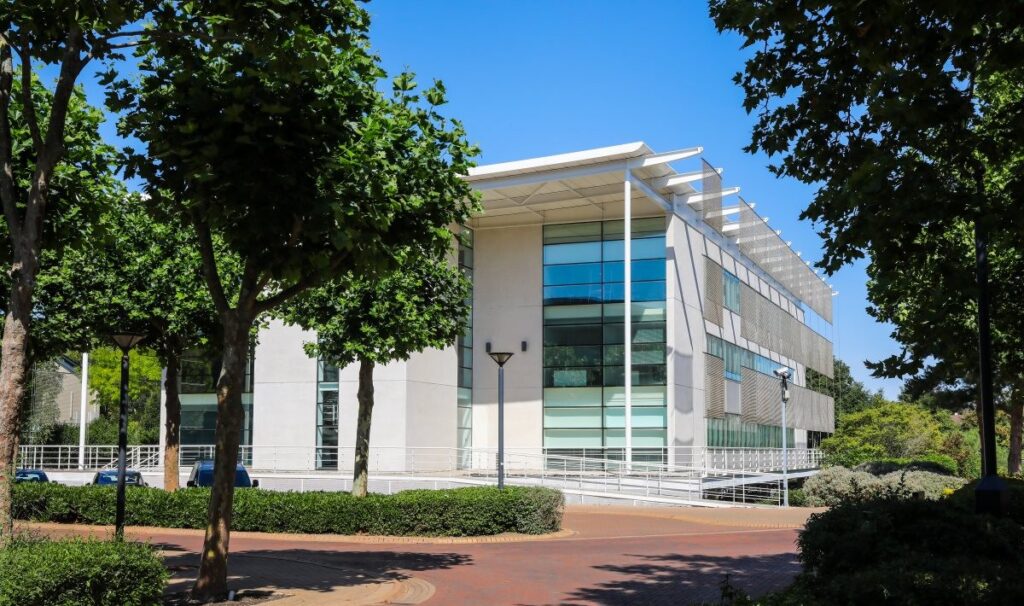
Located at the Harwell Science and Innovation Campus, the laboratory, named the Darwin SatCom Lab, is now open to companies looking to test proofs of concept using two Renault TWIZY electric cars, which have been converted into CAVs and fitted with sensors to allow them to be controlled from the Lab and driven around specific areas of the Campus.
Commenting on the formal opening of the Lab, COO at O2, Derek McManus, said “We’re delighted to announce that the Darwin SatCom Lab is now open for business at Harwell Campus, allowing companies to put theory into practice and test innovative ideas using our connected and autonomous vehicles. It’s the next step in getting autonomous vehicles on the road and making the UK’s transport network greener.”
Welcoming the Lab to the Campus, Dr Barbara Ghinelli, Director, Harwell Campus Clusters, said “We are thrilled to be the home of the Darwin SatCom Lab, which puts us at the heart of emerging fields of 5G satellites, autonomous cars, and green energy. These multidisciplinary projects are where Harwell’s cluster model thrives – enabling an innovative ecosystem, a ’Harwell Living Lab’, where sectors, such as space and energy, can collaborate and trial green transport technologies that may be used on our roads in years to come.”
One proof of concept test already underway tracks the CO2 emissions of the vehicles using the LIDAR sensors. By using satellite imagery to see the areas the vehicles are travelling through and monitor local biodiversity, the laboratory team is able to calculate the emissions savings of taking different routes based on carbon capture from nearby trees. This research will inform how O2’s retail partners carry out last mile deliveries, bringing goods such as groceries directly to their customers.
The Lab is part of a four year programme, Project Darwin, which brings together Oxford and Glasgow Universities, Hispasat, start-ups specialising in self-driving mobility solutions and the Darwin Innovation Group Oxford with Telefonica/02 and is supported by the European Space Agency and UK Space agency – all connected through the Harwell Space Cluster.
Dr Joanna Hart, Harwell Space Cluster Development Manager stated her focus would be on attracting companies to use the lab, not just in the UK but from overseas, “This offers forward-looking companies the opportunity to harness the power of 5G and satellite communications and make their ideas a commercial reality. We look forward to opening up the Lab to a national and international audience who want to put theory into practice using CAVs.”
Concluding remarks from Rodrigo Barreto, Head of Enterprise Architecture at the Darwin Innovation Group underscored the benefit commercial companies can derive from the lab: “The Darwin SatCom Lab, in partnership with Telefónica and Hispasat, offers companies a place where they can test innovative solutions and develop proof points to support new initiatives. The strength of the Lab lies in combining 5G and satellite communications, opening up the possibility of creating mobility services that can fall back on satellite communications in scenarios where 5G is not always available.”