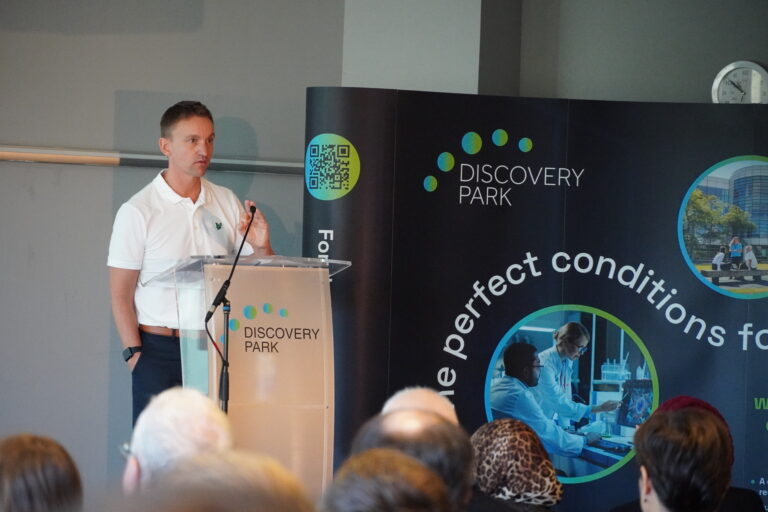

The end of July saw the publication of the new Innovation Strategy by the Department for Business, Energy and Industrial Strategy. The strategy was launched by Kwasi Kwarteng, the BEIS Secretary of State at the Advanced Manufacturing Research Centre near Sheffield.
Sitting in the audience at the launch and having worked with other UKSPA member colleagues to feed into the consultation process that informed the strategy it was interesting to see which elements of the strategy were emphasised at the launch, and the subsequent Q&A.
It’s important to reflect on what the Strategy is and also what it is not. What it isn’t is a document full of operational detail – unlike the Industrial Strategy of 2017 – there is a certain lack of specificity within the 116 page document. What it is is a strategy which seems to accept a model of funding and delivering innovation which embraces elements of risk more comfortably and is also more diverse in its approach than might be expected from central government.
The strategy outlines how the government will focus its efforts to support businesses and institutions delivering innovation, setting out plans in four areas: access to finance for businesses; supporting and nurturing talent; recognising and helping institutions and places support innovation and stimulating innovation in technology and missions that will provide the UK with a strategic advantage.
Each of these four areas mirror what UKSPA members deliver to their tenant companies, partners and their local economies on a daily basis. To make the strategy a success, BEIS must translate this blueprint strategy into reality. The UK has a mature and evolving innovation ecosystem which can help deliver the objectives contained within the Innovation Strategy.
With over 130 member locations across the UK, from Orkney to Plymouth, from Belfast to Aberystwyth, UKSPA is ideally placed to help turn concept into reality. But we must be smart, this ecosystem needs to be nurtured and supported and we must hold government’s feet to the fire on this. Government needs to work with UKSPA and its members to leverage our existing assets, making the most of the multi £billion investments made over past decades in our innovation infrastructure. This infrastructure is place based and forms the UK wide network around which ‘things happen’ – clusters develop, supply chains grow, new industries are born and nurtured, new skills develop and high value sustainable employment is created.
The UKSPA network provides a spring board for levelling up and sustained economic growth in all four nations. Our network and members represent one of the UK’s most significant innovation delivery assets.
We look forward to working with BEIS and its constituent bodies to operationalise and deliver the Innovation Strategy, taking world-leading science and developing it into new products and services that are successful in international markets – something that UKSPA members have been doing highly effectively since 1984.